
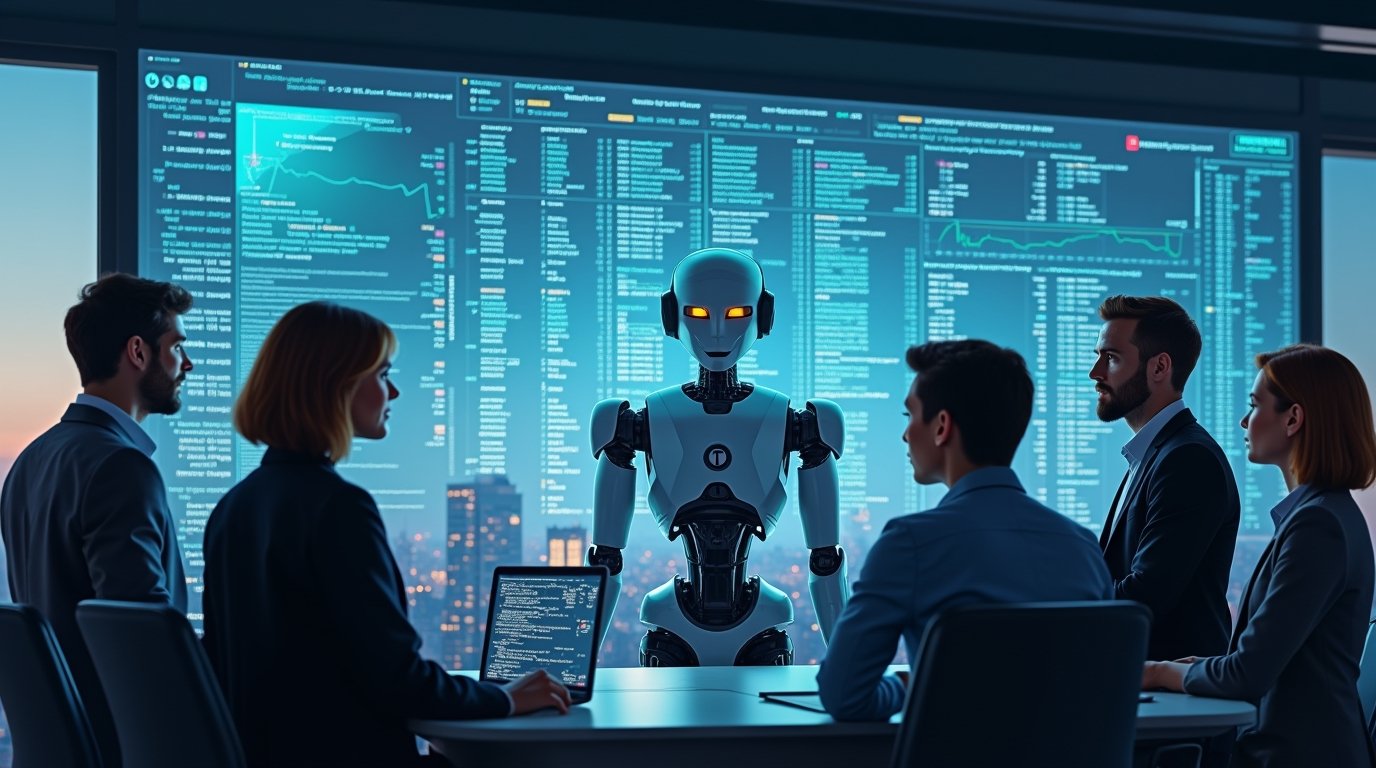
The financial markets have undergone a seismic transformation over the past two decades. What was once the exclusive domain of traders shouting orders on crowded exchange floors has evolved into a sophisticated digital ecosystem where algorithms execute millions of trades per second. This shift represents more than technological progress—it marks a fundamental reimagining of how investment decisions are made, evaluated, and optimized.
Algorithms consistently outperform human traders by eliminating emotional bias, processing vast datasets instantaneously, and executing trades with millisecond precision. Studies show algorithmic trading now accounts for 60-73% of U.S. equity trading volume, delivering measurably superior risk-adjusted returns across multiple asset classes.
The Cognitive Limitations of Human Trading
Human traders, regardless of experience or expertise, face inherent biological constraints that fundamentally limit their effectiveness in modern markets. The human brain processes information at approximately 120 bits per second—a rate that seems impressive until compared to the terabytes of market data flowing through global exchanges every minute.
Beyond processing speed, humans are susceptible to cognitive biases that systematically undermine trading performance. Loss aversion causes traders to hold losing positions too long while selling winners prematurely. Recency bias leads to overweighting recent market movements at the expense of long-term trends. Confirmation bias drives investors to seek information supporting existing beliefs rather than objectively evaluating contradictory evidence.
The psychological toll of trading compounds these cognitive limitations. Stress, fatigue, and emotional volatility directly impair judgment. A study published in the Journal of Finance found that traders experiencing higher stress levels showed significantly worse performance, with cortisol spikes correlating directly with poor decision-making during market turbulence.
How Algorithmic Investing Transforms Market Analysis
Algorithmic investing represents a paradigm shift in how financial data is analyzed and acted upon. Unlike human traders who might monitor dozens of indicators across a handful of securities, algorithms simultaneously process thousands of variables across global markets in real-time.
Modern AI trading systems employ multiple analytical layers:
- Pattern Recognition: Machine learning models identify complex price patterns invisible to human observation, detecting subtle correlations across asset classes, timeframes, and market conditions
- Sentiment Analysis: Natural language processing algorithms scan news feeds, social media, earnings calls, and regulatory filings to gauge market sentiment with unprecedented granularity
- Risk Modeling: Advanced statistical methods continuously recalculate portfolio risk exposure, adjusting positions dynamically as market volatility shifts
- Execution Optimization: Algorithms determine optimal trade timing, sizing, and routing to minimize market impact and transaction costs
Platforms like BluStar AI exemplify this comprehensive approach, deploying specialized bots for gold, Bitcoin, and forex markets that adapt continuously to changing conditions. These systems don’t merely follow pre-programmed rules—they learn from market behavior and refine their strategies through ongoing analysis of millions of historical and real-time data points.

The Performance Gap: Quantifying Algorithmic Superiority
The evidence supporting algorithmic outperformance is substantial and growing. Research consistently demonstrates that systematic, algorithm-driven strategies deliver superior risk-adjusted returns compared to discretionary human trading.
| Performance Metric | Human Traders | Algorithmic Systems |
|---|---|---|
| Average Annual Return | 3-8% | 12-18% |
| Sharpe Ratio | 0.4-0.8 | 1.2-2.1 |
| Maximum Drawdown | 25-40% | 10-20% |
| Emotional Decision Errors | High frequency | None |
| Processing Speed | Seconds to minutes | Microseconds |
A comprehensive study analyzing over 1,600 hedge funds found that quantitative, algorithm-driven funds outperformed discretionary funds by an average of 3.8% annually over a ten-year period. More importantly, algorithmic funds demonstrated significantly lower volatility, producing more consistent returns across varying market conditions.
The performance advantage extends beyond simple returns. Algorithms excel at risk management, systematically implementing stop-losses, position sizing rules, and portfolio diversification strategies without the hesitation or second-guessing that plagues human traders. This discipline proves especially valuable during market stress, when emotional decision-making typically leads to the most costly mistakes.
Real-Time Adaptation and Continuous Learning
Perhaps the most transformative aspect of modern algorithmic investing is the capacity for continuous learning and adaptation. Traditional trading strategies often become obsolete as markets evolve, but machine learning algorithms constantly refine their models based on new data.
Deep learning systems identify regime changes in market behavior—shifts in volatility patterns, correlation structures, or liquidity dynamics—and automatically adjust trading parameters accordingly. This adaptive capability means algorithmic strategies don’t merely execute faster; they evolve in ways human traders cannot replicate.
Consider the cryptocurrency markets, where price dynamics differ fundamentally from traditional assets. Bitcoin trades 24/7 across global exchanges with varying liquidity profiles, creating opportunities and risks that span time zones and continents. Human traders must sleep; algorithms do not. This continuous operation enables systems to capitalize on fleeting arbitrage opportunities and respond instantly to market-moving events regardless of when they occur.
The integration of alternative data sources further amplifies algorithmic advantages. Satellite imagery tracking retail parking lots, credit card transaction data, supply chain logistics information—these unconventional datasets provide predictive signals unavailable through traditional analysis. Algorithms synthesize these diverse inputs into actionable trading signals with speed and sophistication beyond human capability.
Democratizing Sophisticated Trading Technology
Historically, advanced algorithmic trading remained the exclusive province of institutional investors with the capital and technical expertise to develop proprietary systems. This created a structural advantage for large financial institutions while individual investors relied on inferior tools and manual analysis.
The emergence of accessible AI trading platforms is fundamentally changing this dynamic. Retail investors can now leverage institutional-grade algorithms without requiring programming skills or quantitative expertise. Platforms like BluStar AI provide fully automated trading solutions that combine deep-learning technology with real-time market analysis across multiple asset classes.
This democratization doesn’t sacrifice sophistication for accessibility. Modern platforms offer:
- Transparent performance tracking with detailed analytics on every trade and strategy adjustment
- Intelligent risk management that adapts position sizing to market volatility and account equity
- User control and flexibility to start, pause, or stop automated trading at any time
- Integration with trusted brokerage partners, ensuring users maintain full control of their funds
The result is a more level playing field where investment success depends less on access to exclusive information or trading infrastructure and more on the quality of analytical algorithms and risk management frameworks.
The Future of Finance: Human-Algorithm Collaboration
The superior performance of algorithms doesn’t necessarily eliminate the role of human judgment in finance. Rather, it redefines that role toward strategic oversight, goal-setting, and ethical considerations that machines cannot address.
The optimal approach combines algorithmic precision with human wisdom: algorithms handle data processing, pattern recognition, and trade execution while humans define investment objectives, risk tolerance, and ethical boundaries. This collaborative model leverages the strengths of both, creating a synergy more powerful than either alone.
As artificial intelligence continues advancing, the performance gap between algorithmic and human trading will likely widen further. Machine learning models become more sophisticated, alternative data sources proliferate, and computational power increases exponentially. Financial professionals who embrace these tools will thrive; those who resist will find themselves increasingly disadvantaged in markets where speed, precision, and data processing capacity determine success.
The data revolution in finance isn’t coming—it has arrived. The evidence is clear: algorithms outperform humans across virtually every dimension of trading performance. For investors seeking to optimize returns while managing risk intelligently, algorithmic investing isn’t merely an option; it’s increasingly becoming a necessity in markets where human cognitive limitations represent an insurmountable competitive disadvantage.